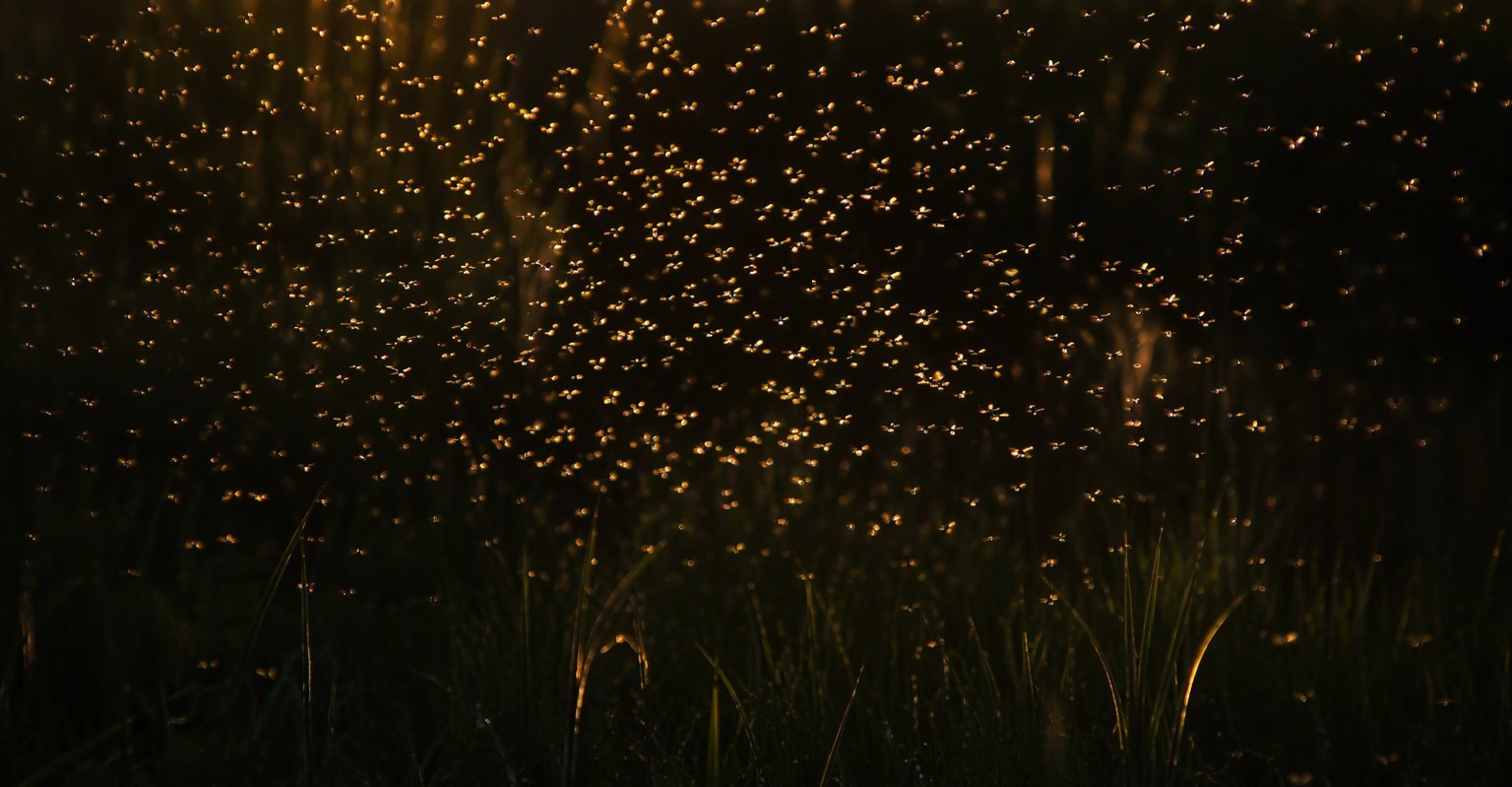

The pattern is so reliable you could set a watch by it: a good soaking storm rolls through, the week passes, and then one evening the yard is unstandable. It’s not your imagination and it’s not a bad year. It’s arithmetic.
The seven-day math
A mosquito goes from egg to flying adult in as little as seven days in summer heat, and it does it in standing water — anything from a clogged gutter to a bottle cap. Sunday’s storm fills every forgotten container, low spot, and sagging tarp on the block. The following weekend, the new generation takes its first blood meal. Every storm is a hatch with a fuse.
The marsh multiplies it
Container breeders explain the yard; the salt marsh explains the neighborhood. Marsh mosquitoes hatch on tidal cycles and travel — some species range miles inland on an evening breeze. That’s why lots closer to open marsh carry heavier pressure no matter how disciplined the yard is, and why the honest promise is dramatic reduction rather than eradication. Nobody sprays the marsh.
The five-minute Sunday walk
The most effective mosquito control a homeowner owns costs nothing: once a week, walk the property and dump everything holding water. Plant saucers, toys, the wheelbarrow, the tarp over the grill, the birdbath, the gutter elbow that stopped draining in April. Five minutes of dumping erases more mosquitoes than any candle, zapper, or bracelet ever sold. Water that can’t be dumped — ponds, ditches, low spots — is what professional larvicide treatment exists for.
Where barrier treatment fits
Adult mosquitoes spend the day resting in cool, shaded foliage — the underside of leaves, the interior of shrubs, the damp side of the structure. A barrier treatment targets exactly those zones, cutting pressure sharply for three to four weeks until the residual fades and new mosquitoes drift in. Combined with the water discipline, it returns the porch. That’s the whole honest pitch, and the mosquito service page prices it in writing before anyone rolls.