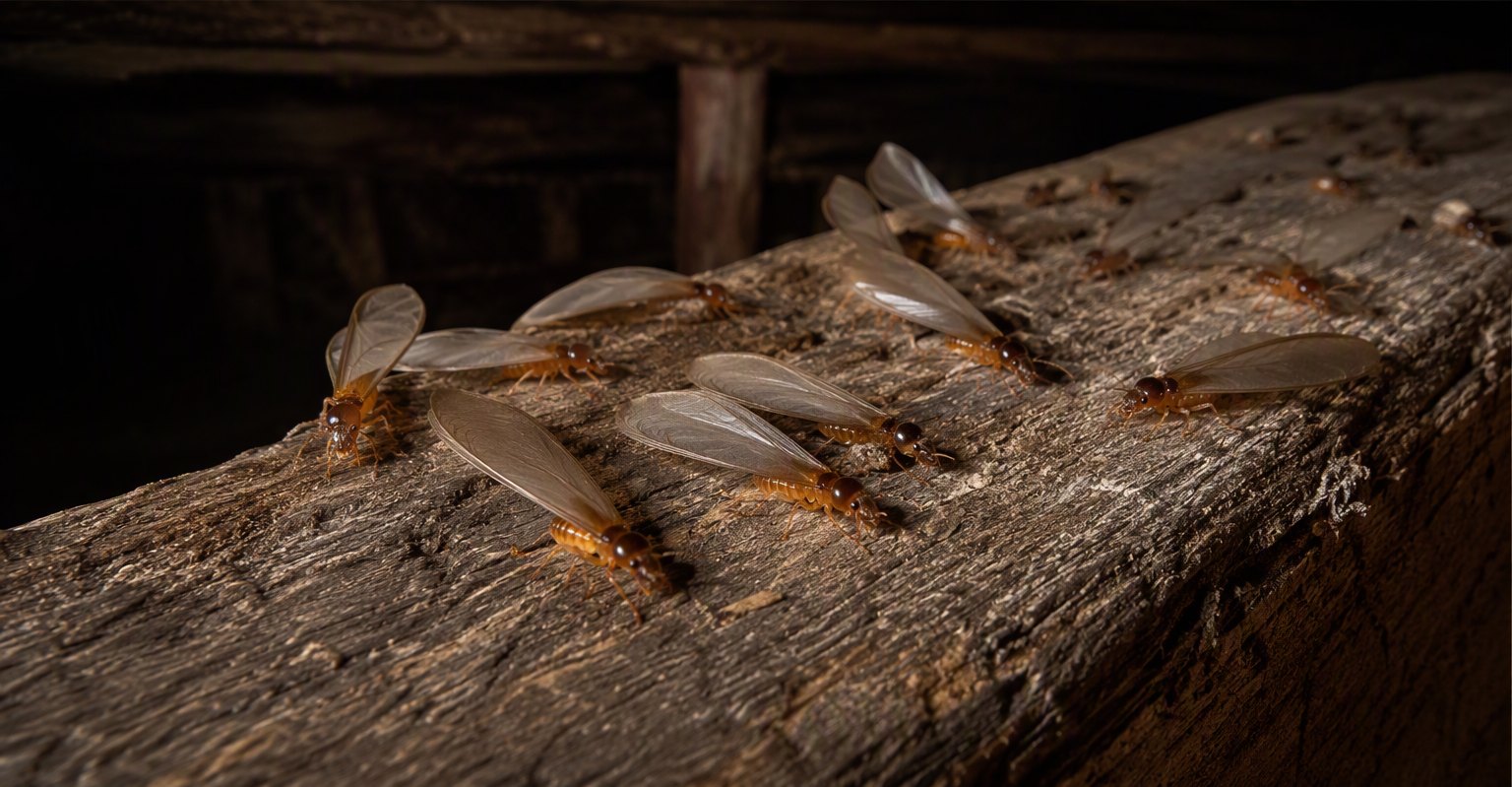
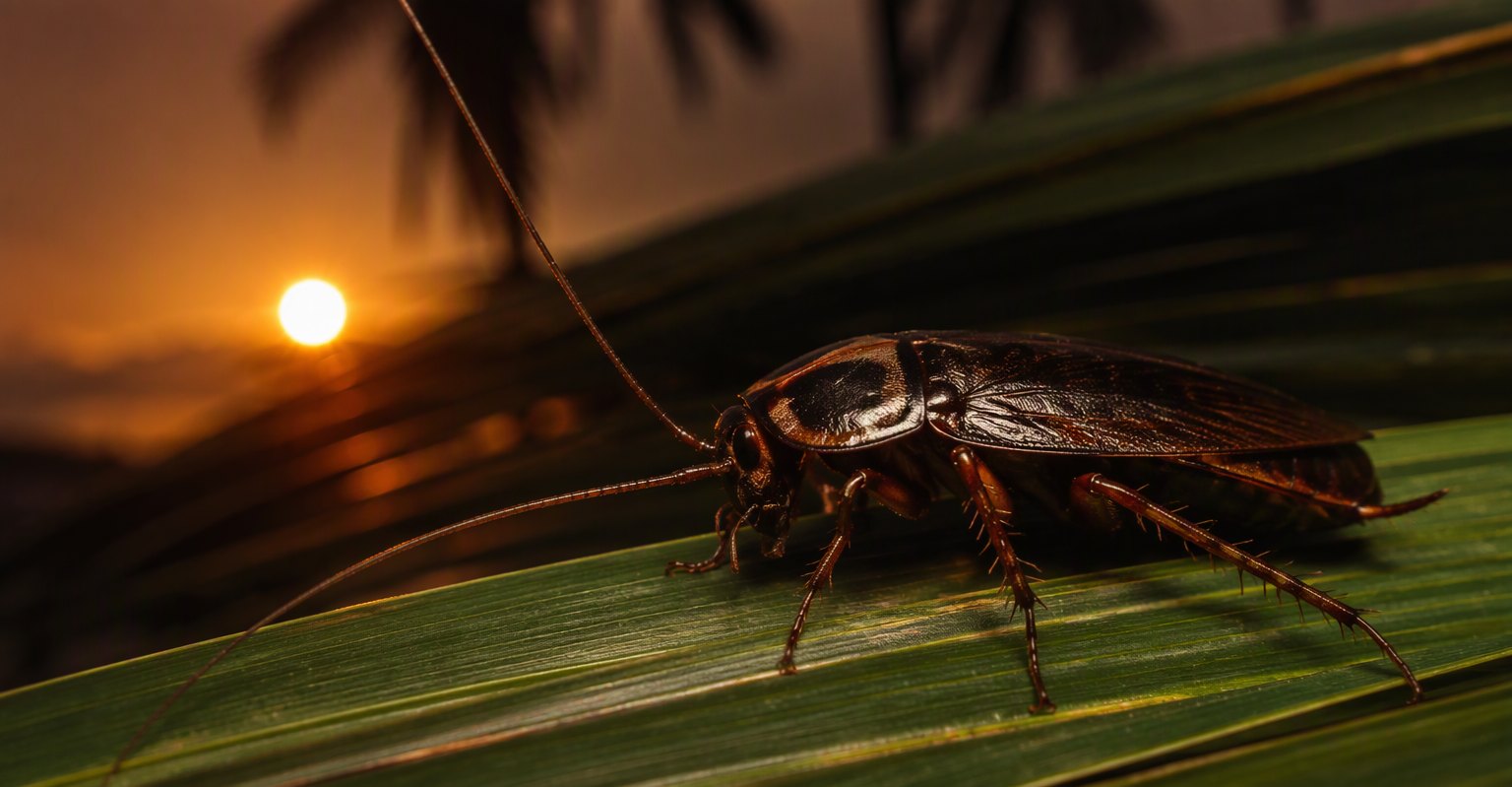
Every Savannah newcomer has the same evening: something enormous crosses the porch, someone says “just a palmetto bug,” and the newcomer Googles. Here it is in one place: a palmetto bug is a cockroach — usually the American cockroach, sometimes the smokybrown. The polite name doesn’t change the taxonomy. What it changes is the prognosis.
The outdoor roaches
American and smokybrown cockroaches are outdoor insects. They live in palmetto stands, mulch beds, leaf litter, and — this is the part nobody loves — sewer systems and storm drains. They wander inside through gaps under doors, weep holes, drain lines, and the occasional unplanned flight. A palmetto bug in the hallway means the perimeter has an opening. It does not mean the house is dirty. These roaches are explorers, not squatters.
The indoor roach
The German cockroach is the different animal: small, tan, two dark stripes behind the head, and a full-time indoor resident. It lives behind the refrigerator motor, inside the dishwasher door, in the hinge of the cabinet — and it breeds continuously. One German roach in daylight implies a population you can’t see. This is the species that “dirty house” accusations belong to, and even then the accusation is sloppy: they arrive in grocery bags, cardboard boxes, and secondhand appliances regardless of housekeeping.
Why the identification sets the plan
For palmetto bugs, the fix is perimeter-first: treat the exterior, seal the entries, correct the harborage — thick mulch against siding, leaf litter, the missing door sweep. Sightings drop to the occasional wanderer. For German roaches, the fix is interior baiting: gel placements and growth regulators the workers carry back to the harborage, plus the kitchen discipline that removes competing food. Spraying either one with hardware-store aerosol just scatters the problem into new rooms.
The sewer connection
If palmetto bugs appear near drains or in a bathroom nobody uses, the route may be the plumbing itself — a dry trap, a cracked line, a missing cleanout cap. Pouring water down a disused floor drain monthly keeps the trap sealed. When the pattern keeps repeating despite a treated perimeter, that’s when the roach service starts looking at the drain routes in earnest.